

Academies of sciences and humanities
Academies are associations of renowned individuals from the worlds of scholarship and the arts.
The academies help policymakers and the public to find suitable answers to current issues and problems, the provided analysis is based on outstanding specialist knowledge. In addition, a key mission of the academies is to coordinate and support long-term foundational research projects and to develop and cultivate interdisciplinary dialogues. They organise symposia and public events, with which they make a valuable and research-based contribution to the dialogue between research, society and the economy.
The Leopoldina is the German National Academy of Sciences and unites researchers with outstanding expertise in almost all fields of research. Yet there are many other academies in Germany, too. They include the Union of the German Academies of Sciences and Humanities, which is an association of eight state academies. Then there is the National Academy of Science and Engineering, acatech, which represents the technical sciences at home and abroad. And since the beginning of the new millennium Die Junge Akademie has represented new scholarly talent.
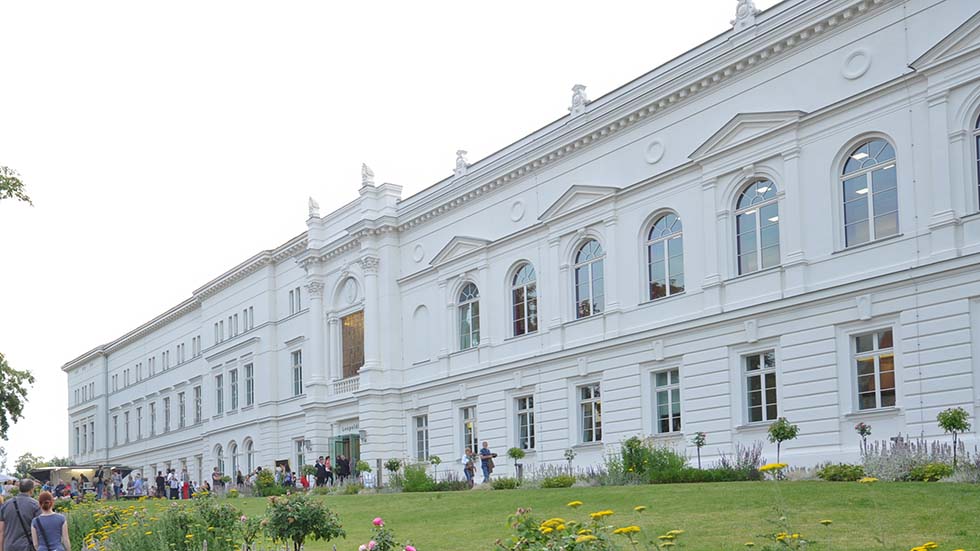
Leopoldina – German National Academy of Sciences
Being the German National Academy of Sciences, the Leopoldina provides independent science-based policy advice on matters relevant to society. To this end, the Academy develops interdisciplinary statements based on scientific findings.
In these publications, options for action are outlined; making decisions, however, is the responsibility of democratically legitimised politicians. The experts who prepare the statements work in a voluntary and unbiased manner.
The Leopoldina represents the German scientific community in the international academy dialogue. This includes advising the annual summits of heads of state and government of the G7 and G20 countries. With 1,600 members from more than 30 countries, the Leopoldina combines expertise from almost all research areas.
Founded in 1652, it was appointed the National Academy of Sciences of Germany in 2008. The Leopoldina is committed to the common good.
Facts and figures
Approx. 1,600 members from over 30 countries
184 members have been awarded a Nobel prize
Close relations with science academies on all continents
Annual budget: approx. 13.8 million euros (2021)
Budget
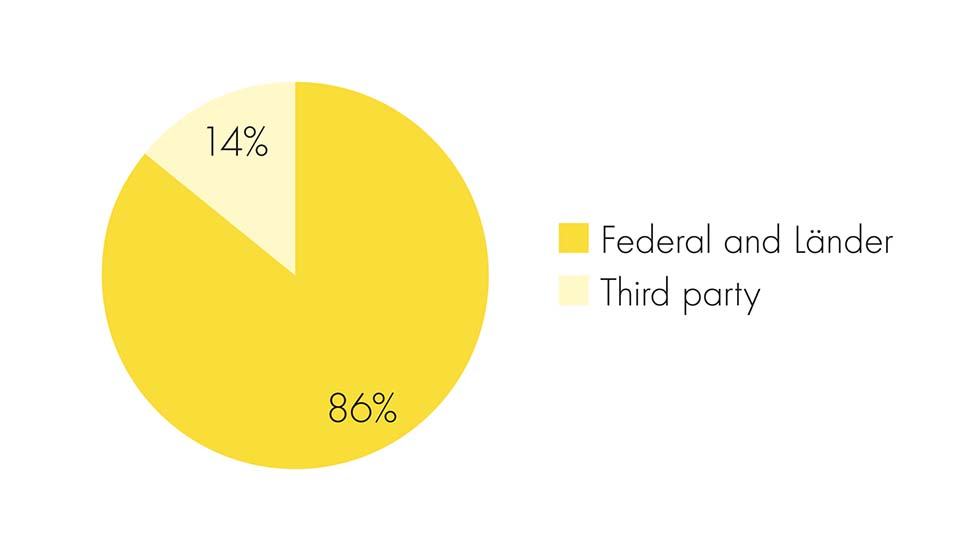
The annual budget totals over 13.8 million euros, including basic funding of 11.9 million euros from the Federal Government and the State of Saxony-Anhalt and 1.9 million euros in third-party funding (2021).
More information
acatech – National Academy of Science and Engineering
acatech, the National Academy of Science and Engineering was founded in 2002. It represents the interests of the German scientific and technological communities at home and abroad. It is an autonomous, independent and non-profit organisation.

As a working academy, acatech supports policymakers and society, providing qualified technical evaluations and forward-looking recommendations. Moreover, acatech is determined to support knowledge transfer between science and industry and to encourage the next generation of engineers.
acatech works to promote sustainable growth through innovation. Its work focuses on four core areas:
- Scientific recommendations: acatech advises policymakers and the public on future technology issues based on state-of-the-art research
- Transfer of expertise: acatech provides a platform for exchanging excellence between the sciences and business
- Promotion of young scientists and engineers: acatech is involved in supporting young scientists and engineers
- A voice for science and engineering: acatech represents the interests of scientists and engineers at the national and international levels
Facts and figures
More than 600 members
150 staff
Roughly 130 research projects since its foundation, collaboration with research institutions and companies
Annual budget: approx. 20.1 million euros (2021)
Budget
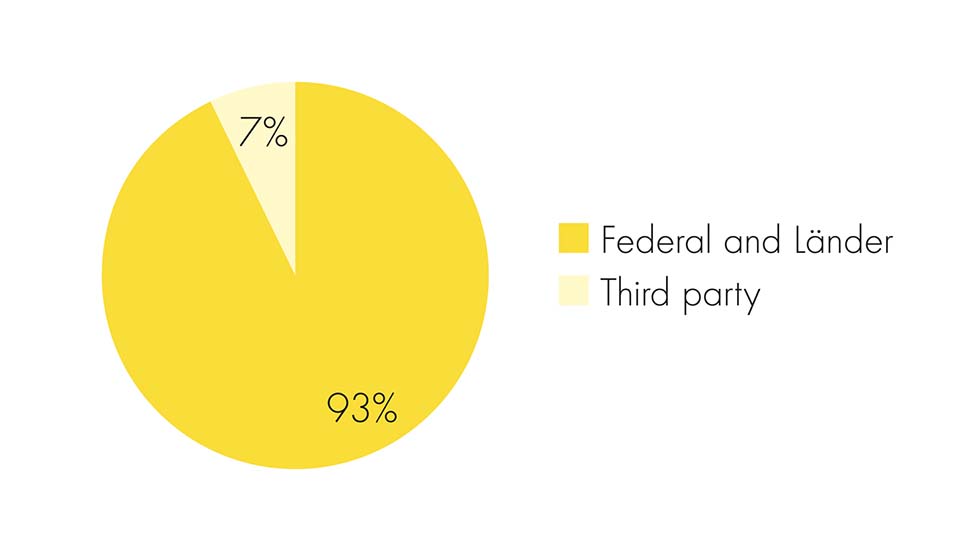
The annual budget totals over approx. 20.1 million euros, including basic funding of 3.8 million euros from the Federal Government and the states (Länder), 14.9 million euros of public-sector project funding and 1.4 million euros of private-sector project funding (2021).
More information
Die Junge Akademie
Die Junge Akademie, founded in 2000 by the German National Academy of Sciences Leopoldina and the Berlin-Brandenburg Academy of Sciences and Humanities, is the world’s first academy for outstanding young academics. Its members hail from all scientific disciplines and the arts. They explore the potential and limits of interdisciplinary work and aim to start conversations between science, art and society, and to generate momentum in discussions on science policy. Since its founding, Die Junge Akademie has developed into a role model and example for similar initiatives in many other countries.

Die Junge Akademie has prioritised the following two tasks: encouraging academic, especially interdisciplinary, discourse among outstanding young academics as well as promoting initiatives at the intersection of science, art, science management, science policy and society.
Facts and figures
50 members, access to a personal budget as well as to a joint research budget
5-year membership
Approx. 10 research groups and 20 projects
Budget
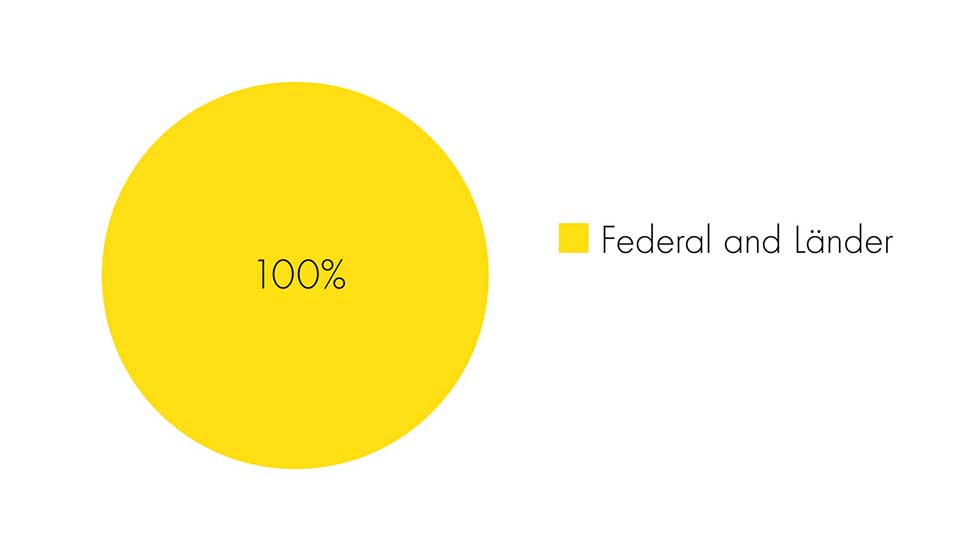
90 per cent of the Junge Akademie’s budget is funded by the Federal Ministry of Education and Research (BMBF) with the State of Saxony-Anhalt and the Berlin-Brandenburg Academy of Sciences and Humanities each contributing a further 5 per cent.
More information
Union of the German Academies of Sciences and Humanities
The Union of the German Academies of Sciences and Humanities is comprised of eight German academies of sciences based in Berlin, Düsseldorf, Göttingen, Hamburg, Heidelberg, Leipzig, Mainz and Munich. The main task of the Union is to coordinate the Academies’ Programme and to enhance the profile of its member academies at home and abroad. The member academies of the Union have elected more than 2,000 scientists and scholars from a wide range of disciplines as ordinary, corresponding and extraordinary members.

The eight academies in the Union are:
- Berlin-Brandenburg Academy of Sciences and Humanities (1992/1700)
- Göttingen Academy of Sciences and Humanities (1751)
- Bavarian Academy of Sciences and Humanities (1759)
- Saxon Academy of Sciences and Humanities in Leipzig (1846)
- Heidelberg Academy of Sciences and Humanities (1909)
- Academy of Sciences and Literature, Mainz (1949)
- North Rhine-Westphalian Academy of Sciences, Humanities and the Arts (1970)
- Academy of Sciences and Humanities in Hamburg (2004)
The Academies’ Programme
The Academies’ Programme (Akademienprogramm) is coordinated by the Union of the German Academies of Sciences and Humanities. It is currently Germany’s most comprehensive research programme in the humanities and social sciences, bringing together research projects of the academies under one umbrella.
It currently involves 128 projects with more than 188 working groups. The projects include dictionaries and editions in the humanities, long-term studies at the interface between the natural sciences and humanities as well as foundational research projects in social sciences and cultural studies.
Once a year the academies affiliated in the Union organise the so-called Academies’ Day, where they present their research to the public at large.
Research budget of the Academies’ Programme
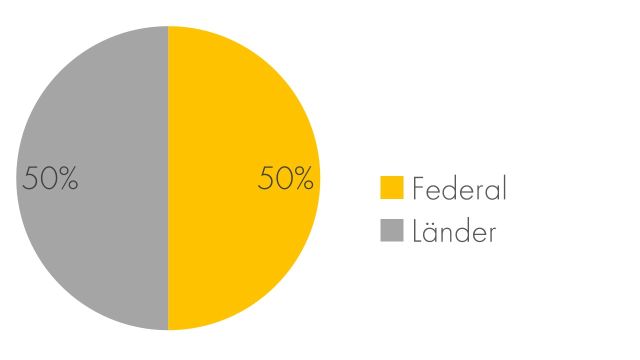
The Union of the German Academies of Sciences and Humanities administers the Academies’ Programme, which is funded equally by the German states (Länder) and the Federal Government with a total budget of 72.9 million euros (2022). As the individual Academies of Sciences are state institutions rather than federal institutions, their basic budgets are funded solely by their respective states.

Union der deutschen Akademien der Wissenschaften
Main Office
- Geschwister-Scholl-Str. 2
- 55131 Mainz
Union der deutschen Akademien der Wissenschaften
Berlin Office
- Jägerstraße 22/23
- 10117 Berlin
Prizes awarded by academies
The affiliated bodies of the Union of the German Academies of Sciences and Humanities award numerous prizes, medals and scholarships. They support junior researchers and acknowledge special research accomplishments or a person’s outstanding life’s work.