Index
-
01
Research landscape -
02
Your goal -
03
Plan your stay -
04
Success stories -
05
Our service

- Research landscape
- Your goal
- Plan your stay
- Success stories
- Our service
- Plan your stay
Support making RiG more international!
Start SurveySupport making "Research in Germany" more international! Your expertise and commitment are the key to the further development of promoting the German research landscape. We invite you to take part in our online survey and share your valuable experiences and opinions. Duration: 7-10 min.
Please start the survey at the end of your visit.
Innovations to fight the pandemic
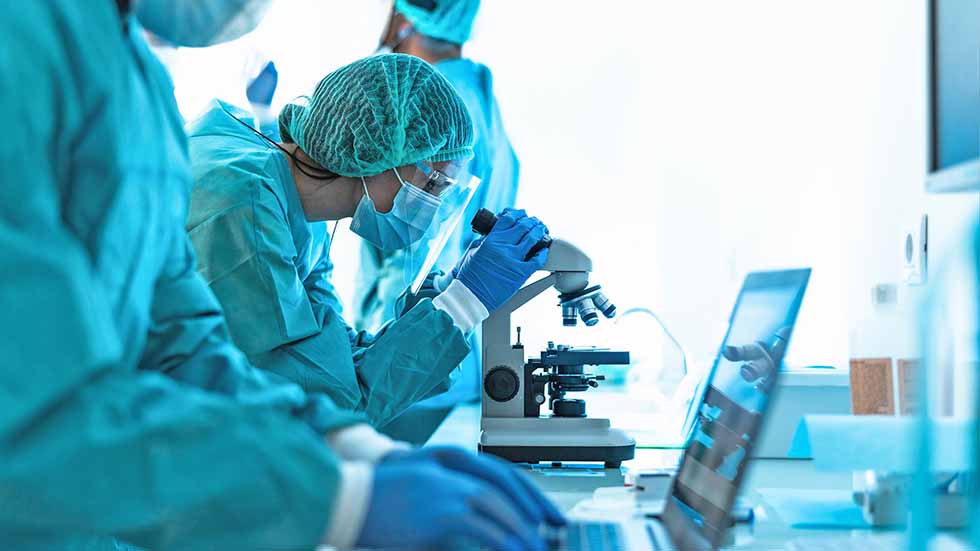
The World Health Organization’s Hub for Pandemic and Epidemic Intelligence has begun its work in Berlin. Its job is to generate important impetus and play a coordinating role in the event of future pandemics. The first projects being launched by the Hub could already raise the early detection of and fight against pandemics to a new level.
AdobeStock
Scientists unfortunately see a very high probability of another pandemic occurring: the largely unanimous opinion of virologists around the world is that somewhere, sooner or later, a pathogen will once again make the leap from animal to human and cause global problems.
Humankind has learnt a great deal from the ongoing coronavirus pandemic, however. And everything that has been learnt is gathered together in just a few rooms at Charité Universitätsmedizin in the German capital Berlin. This is now home to the newly founded Hub for Pandemic and Epidemic Intelligence of the World Health Organization (WHO). The Hub is soon to get its own campus where as many as 120 scientists will be working in the foreseeable future. The Hub is headed by the epidemiologist Dr Chikwe Ihekweazu, former director general of the Nigeria Centre for Disease Control.
Help from artificial intelligence
In future, the WHO Hub is to serve as the command centre for tackling pandemics. At the same time, it is to help identify threats and dangerous new pathogens at the earliest possible stage. To achieve this, what is needed above all are competencies in handling the enormous quantities of data that are generated around the world. The first projects launched at the Hub are geared precisely to building this capacity.
One example is Epidemic Intelligence from Open Sources (EIOS), one of the projects at the new Hub that has made the furthest progress so far. EIOS is essentially a kind of autonomous monitoring system that can be accessed and added to by staff of the WHO and at health and research organisations worldwide. At the heart of EIOS is a computer programme that automatically collects, sorts and classifies information from publicly accessible online sources about health, public health and epidemiology. Day and night, the programme collects several thousand articles per hour; whenever it detects potential threats, it notifies the WHO Hub in Berlin accordingly.
Another project is the Pandemic and Epidemic Intelligence Collaboratory, an interactive digital environment in which scientists can meet and collaborate with a view to sharing ideas, advancing their research and coordinating responses to developments that pose a potential risk to health.
International cooperation in focus
Charité/Wiebke Peitz.
These two projects alone make it clear that international cooperation takes centre stage at the Hub – which is hardly surprising given that the entire construct of its mother organisation, the WHO, is based on large-scale international collaboration. This is why its staff are already working together with dozens of health authorities, including the National Institute of Health in the USA and the Africa Centres for Disease Control and Prevention.
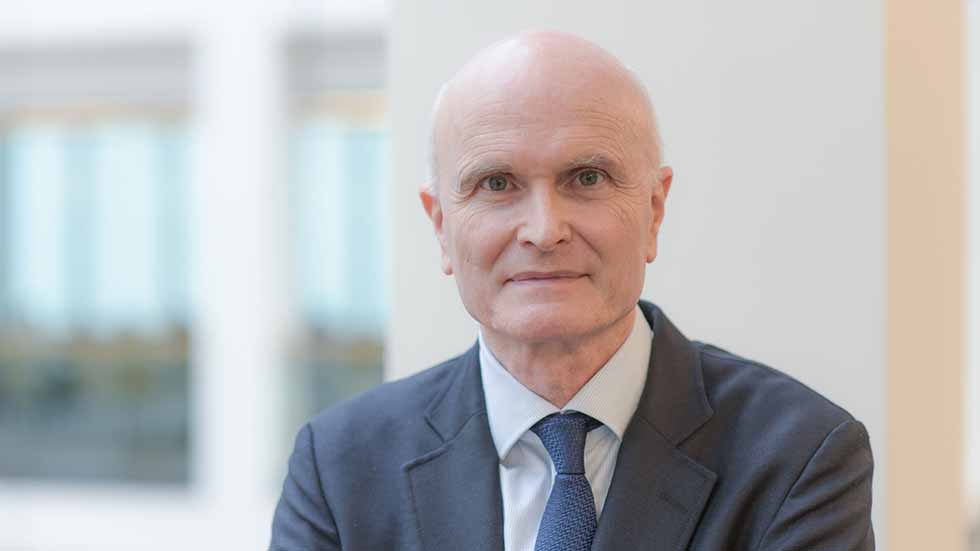
In view of the huge challenges it faces, the WHO Hub is also cooperating closely with German research institutions from the outset, especially the Robert Koch Institute (RKI) and Charité –Universitätsmedizin. “The WHO Hub in Berlin sends out a clear signal when it comes to strengthening international research cooperation for global health: unless there is lasting collaboration with reliable partners, the urgent problems in this area will not be solved. We at the Charité are proud to contribute in this way to overcoming global crises,” says Professor Axel Pries, the dean at Charité – Universitätsmedizin and the president of the World Health Summit.
The primary goal is to establish the flow of data to the WHO Hub as quickly as possible and ensure that it is as comprehensive as possible in every way: with respect to the number of countries that make their data available, and to the scope and depth of the data.
If this is achieved, the Hub will doubtless play a key role during the next pandemic – if and when another one comes along. That said, the Hub is already very important today, as it proves that humankind is able when faced with a major challenge to work together and overcome boundaries.