Your experience on our website is key to advancing this platform - share your valuable insights by taking part in our online survey after your visit: Click here to participate. Duration: 7-10min.

Support making RiG more international!

Take part in our online survey at the end of your visit and share your valuable experiences and opinions. Duration: 7-10 min.

Start survey

Research in Germany

Germany is a top destination for PhD students, postdocs, and senior scientists. The website "Research in Germany" helps you to find your way to Germany, to seek for PhD positions, research jobs or funding opportunities. It describes the German research landscape and helps you plan your career and life in Germany. Welcome to Germany - the Land of Ideas!

Why Germany

There are many good reasons for doing research in Germany. It is one of the most innovative, stable and well endowed  research nations  and its universities and research institutions are among the best in the world. Values like freedom and diversity as well as social and ecological responsibility are considered important to ensure knowledge gain and societal progress.

Explore

Your goal

PhDGermany database

Find a selection of open PhD positions in Germany in the PhDGermany database!
Search PhD offers

Pinned topics Back to top

Current developments & news

Find more

Here you will find a selection of the latest R&D news from German universities, non-university research institutes and industrial research facilities.

The wasps that horrified Darwin reveal evolution's one-way streets

A new study led by the Museum für Naturkunde Berlin reveals that some evolutionary changes occur repeatedly, but almost never in reverse, shedding light on a fundamental question in biology: how predictable is evolution?
Nov 6, 2026, 6:00:00 PM

How a metabolite protects the enzyme that consumes it

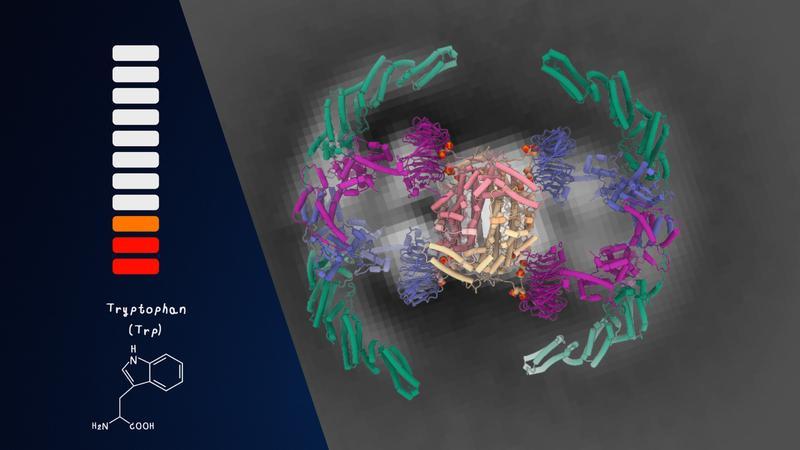
Metabolites are consumed by enzymes to produce other vital molecules as well as to control metabolite levels. But how do cells avoid consuming too much? Researchers from the MPI of Biochemistry, with the University of Nevada, Las Vegas, and the de Duve Institute in Brussels, have deciphered such molecular regulation in tryptophan metabolism. The essential amino acid tryptophan binds to a second site on the enzyme TDO2, distinct from where it is consumed. This sequesters a region needed by two effectors, the kinase CK2 and the ubiquitin ligase CUL1–β-TrCP, which act sequentially to signal TDO2 degradation. The findings are now published in Molecular Cell.
Nov 6, 2026, 3:49:18 PM

Malnutrition Due to Illness: An Underestimated Problem in Hospitals

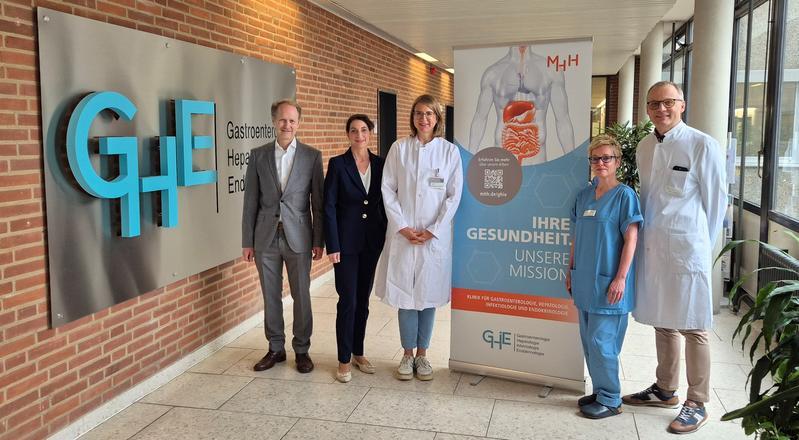
Hannover Medical School (MHH) and Techniker Krankenkasse (TK) have signed a quality agreement to improve the treatment of affected patients. Previously, a study by MHH and the University Hospital of Würzburg had highlighted the gap in care and its negative consequences, making clear the need for action.
Nov 6, 2026, 12:33:18 PM

New Study Finds Future Warming Events Will Outdo the Extreme Heatwaves of the Recent Past

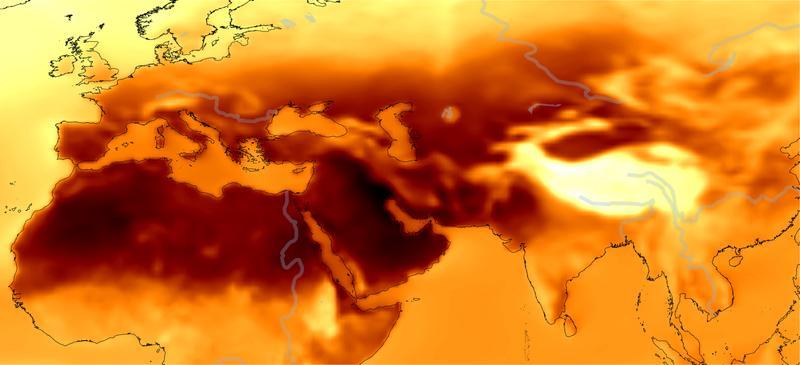
The extreme heatwaves we have seen over the last few years may only serve as a preview of what is to come as a result of climate change. A new study led by researcher Philipp Aglas-Leitner from Freie Universität Berlin, published in Nature Communications, finds that future heatwaves could last longer, impact larger areas, and be much more severe.
Nov 6, 2026, 12:23:37 PM

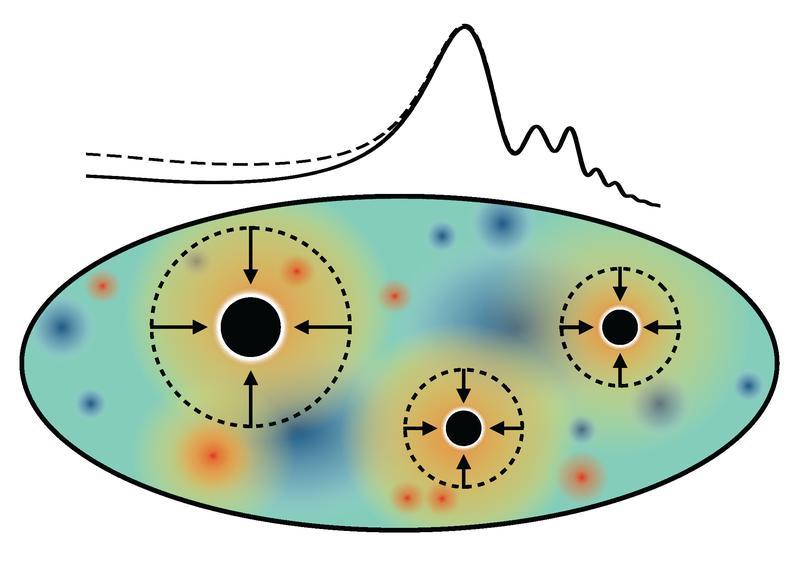
Mainz researchers rule out “stupendously large” primordial black holes as significant part of dark matter

Cosmic microwave background measurements by Planck satellite show no evidence of stupendously large black holes formed shortly after Big Bang to contain significant amounts of dark matter
Nov 6, 2026, 12:11:33 PM

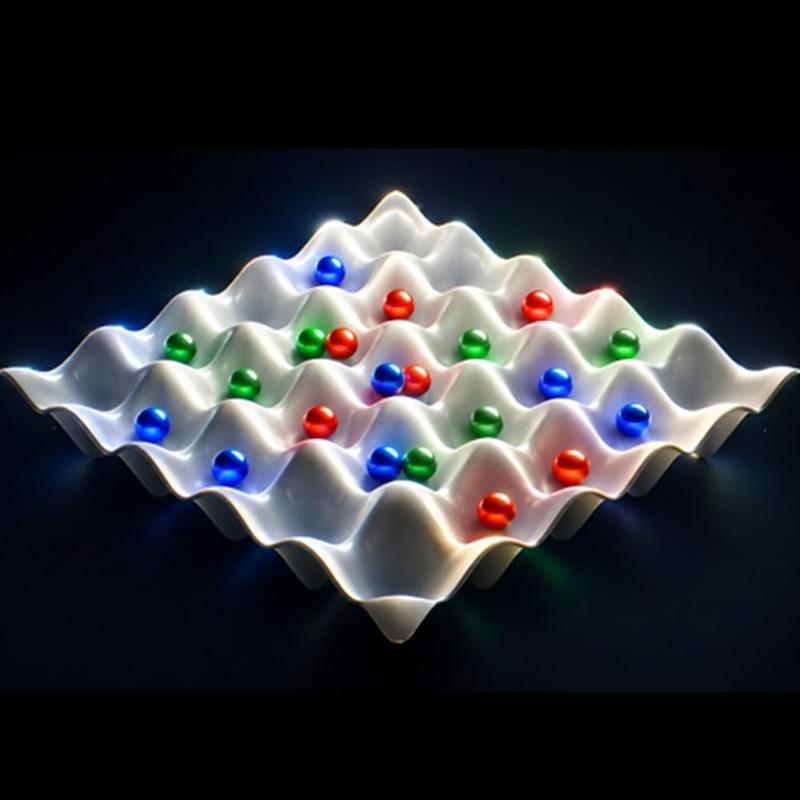
Quantum gas microscope: Interactions in a three-component Hubbard system can be precisely controlled

For the first time, an international team of researchers from Germany, Thailand, India, China and United States has created a three-component Hubbard system with tunable interactions in the laboratory. In doing so, the team used a quantum gas microscope to make the individual atoms visible. The study, which was published in “Science”, provides an important foundation for future quantum simulations of nuclear physics and materials science.
Nov 6, 2026, 10:51:32 AM
Find more

Upcoming events

Find more
06.11. – 09.11.
NOV 2026∙ BERLIN (GERMANY)
Falling Walls Science Summit 2026
08.11. – 10.11.
NOV 2026∙ LOS ANGELES
re:publica Los Angeles
11.11.
NOV 2026∙ ONLINE
Visa for Germany
Find more

Stay connected: Research in Germany on social media