Support making RiG more international!
Take part in our online survey at the end of your visit and share your valuable experiences and opinions. Duration: 7-10 min.
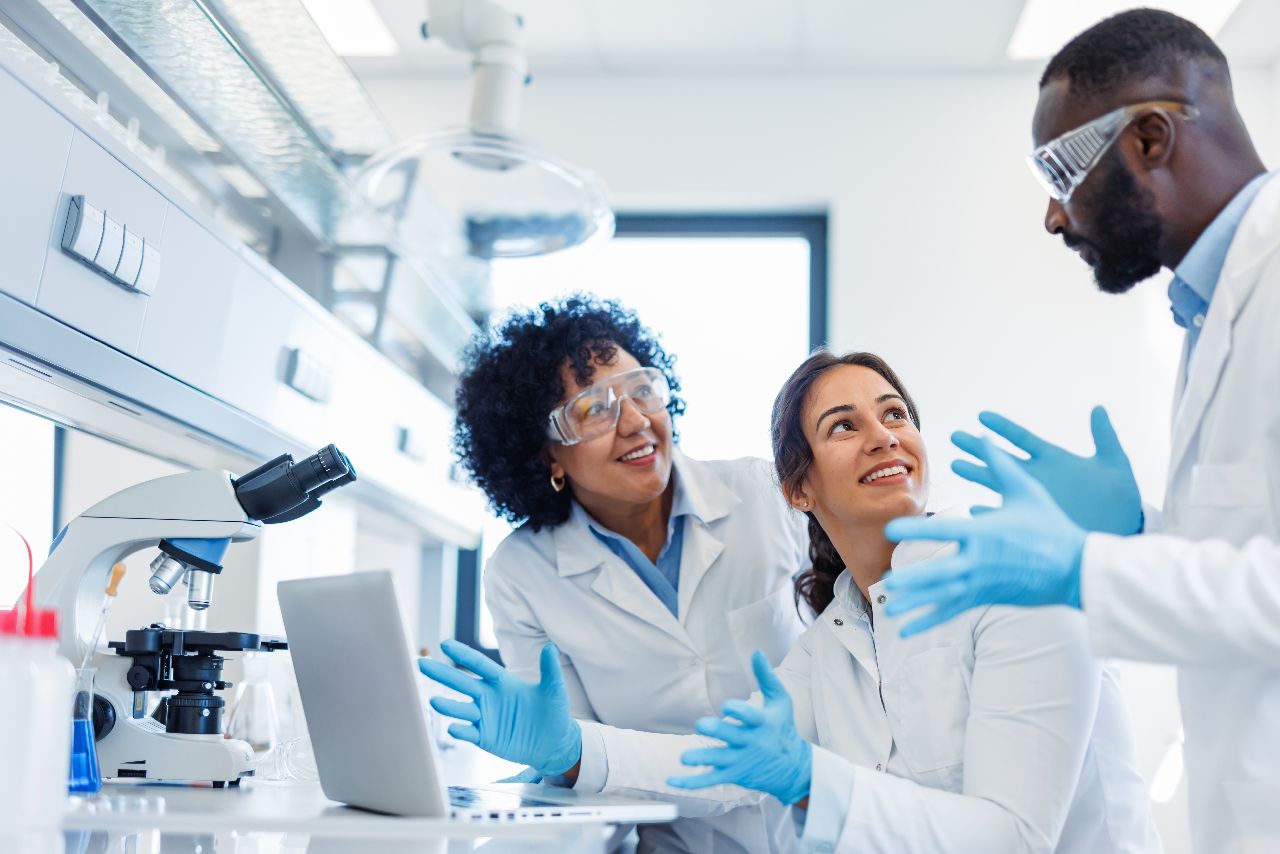
Postdoc careers and advanced research in Germany
Looking to take the next step in your academic career in Germany? This month’s highlights offer valuable insights, practical guidance, and inspiring success stories for international postdocs and early-career researchers. From information sessions on Germany’s research landscape, funding opportunities, and career pathways, to first-hand experiences of researchers who have built successful careers across disciplines and borders, discover what Germany’s vibrant research ecosystem has to offer. Learn about innovative projects in fields ranging from urban resilience and neuroscience to sustainable materials and textile technologies, and explore how universities and research institutions are creating new opportunities for international talent. Whether you are planning a postdoctoral stay, seeking funding, or exploring long-term career prospects, these stories and events provide inspiration and essential tools for your journey.
Jump directly to an article
- Online information session „From postdoc to research leadership: opportunities at the University of Jena“
- Info session postdoc opportunities in Germany: welcome to the German research system - Ruhr-University Bochum
- Understanding Academic Staff Categories in Germany
- Dr Brilliant’s journey into hearing research
- Visiting scholar from Kenya conducts research on 3D printing onto textiles
- Researching Urban Resilience in Times of Conflict
- Marie Skłodowska-Curie Fellowship at BAM: Uncovering Why Metallic Glasses Break
- A stony path conquered through tremendous support
- Understanding the brain in motion
- Building a research career in Germany: an international perspective
- Looking beyond the postdoc? Discover the career path of a professor at a German University of Applied Sciences
- Are you an early postdoc interested in expanding your international network?
- Writing Grant: 3-Month Fellowship
- Lore Agnes Fellowship
- Advancing Sustainable Textile Processing
- Career questions answered
- Welcome to Mittelhessen
- Doing Postdoc Research at a Leading Research Institute
- Two bright minds pioneering solar technologies
Online information session „From postdoc to research leadership: opportunities at the University of Jena“

12. August, 14:00 – 15:30 h, online
The session begins with an overview of the university's postdoc services, from individual counseling and qualification programmes to structured career conversations. After that, the new Jena Cluster of Excellence "Imaginamics" presents its opportunities for postdocs from Humanities and Social Sciences. The Cluster contributes to a better understanding of social conflicts and debates by researching social imagining.
Through brief presentations and time for questions, the event gives researchers a grounded picture of the possibilities a postdoc career in Jena holds.
Info session postdoc opportunities in Germany: welcome to the German research system - Ruhr-University Bochum

10 September, 2026. 12:00 - 14:00 h (UTC+1h) online via Zoom
Get your toolbox ready for pursuing a postdoc career in Germany!
Embarking on a postdoc journey in a foreign country with a different academic system can be both exciting and challenging. Join the online info session to discover the details of Germany’s research and career landscape and learn about various funding opportunities and essential aspects to consider when writing applications for third-party funding or applying for job positions.
The info session provides an overview over the most important aspects of becoming a Postdoc in Germany and offers comprehensive information about:
- the German career system in research
- conditions and career factors for a research career in Germany
- how to get in contact with a German professor
- funding possibilities for postdocs
Also, you’ll get an exclusive overview of the research environment at Ruhr University Bochum.
Register by 8 September here!
Understanding Academic Staff Categories in Germany

The German university system is evolving. Following the Science and Humanities Council's (Wissenschaftsrat) recommendations, federal states are introducing new staff categories outside the traditional professorship — such as Lecturer, Researcher, or Academic Manager. To help you navigate this transition, this article provides a comprehensive overview of the current legal situation across the individual German federal states.
Dr Brilliant’s journey into hearing research

Dr Brilliant is an Indonesian engineer and a neuroscientist. He currently works as postdoc in the Auditory Neuroscience Lab of Prof. Dr Andrej Kral at Hannover Medical School (MHH). In this short interview, he talks about his journey to Germany, his work in the Cluster of Excellence Hearing4all.connects and the significance of hearing research. Read the interview on the cluster’s website.
Visiting scholar from Kenya conducts research on 3D printing onto textiles

Antibacterial, conductive and tear-resistant: Nonsikelelo Sheron Mpofu is investigating how the properties of fabrics can be modified using 3D printing in the Textile Technologies lab at Hochschule Bielefeld – University of Applied Sciences and Arts (HSBI). At the same time, she wants to learn how more women in her African homeland can pursue careers in STEM fields and is examining corresponding support mechanisms here in Germany. Her research stay was made possible by HSBI’s equal opportunities fellowship for researchers from the Global South. During her research stay in Bielefeld the visiting scholar was assisted by HSBI’s Welcome Center.
Researching Urban Resilience in Times of Conflict

How can residential areas remain resilient when faced with armed conflict? For Ukrainian architect and urban researcher Dr. Nadiia Antonenko, the consequences of war are not only the subject of research—they are part of her own experience. Following Russia’s full-scale invasion of Ukraine, she was forced to leave her home country and has continued her academic career in Germany. Since 2025, she has been conducting research at TH OWL as a Philipp Schwartz Fellow funded by the Alexander von Humboldt Foundation. Her project “Urban Resilience of Blue-Green Infrastructure in Residential Areas Under Military Threats” explores how blue-green infrastructure can strengthen the resilience of residential areas affected by armed conflict. Focusing on the ecological, social, and functional dimensions of urban living environments, she investigates how military conflicts damage ecosystems, reduce biodiversity, and destroy water and green infrastructure—and how these systems can be restored and adapted during recovery. Combining GIS-based spatial analysis, open datasets, and interviews with residents and experts, her research explores how urban nature can support recovery, adaptation, and sustainable reconstruction. The findings aim to provide practical guidance for resilient urban planning in conflict-affected regions worldwide.
Find out more here.
Marie Skłodowska-Curie Fellowship at BAM: Uncovering Why Metallic Glasses Break

Silvia Pomes, mechanical engineer and materials scientist from Italy, has built a career as a researcher across several continents. Her latest stop: a Marie Skłodowska-Curie Fellowship at the Bundesanstalt für Materialforschung und -prüfung (BAM). The fellowship is an EU grant awarded by the European Commission for three years. Fellows find a partner institution where they conduct their research and BAM has been host to a number of Marie Curie-Skłodowska Fellows over the years. Silvia says that finding the right host institution is just as important as having a strong research topic. She chose BAM for their expertise in materials safety research and metallic glasses in particular. In her research project UN-STRUCT, she researches metallic glasses and tackles the question of why some of the strongest metals on earth suddenly fail.
A stony path conquered through tremendous support

For the past three years, Dr. Shanmugapriya Periyannan has worked as a postdoc researcher at the University of Siegen in the field of nano- and material sciences. Her innovative work has earned her numerous awards — but the journey to those honors has been anything but easy.
Shanmugapriya Periyannan was the first member of her entire family to attend university. She earned her initial bachelor’s degree in her hometown in southern India, soon followed by a Master of Technology. It was during her master's studies that Periyannan discovered her passion for the nanosciences. The field would become the central focus of her work, and for the past three years she has been part of the “STAR” (Sensing & Sensibility) project at the University of Siegen, an interdisciplinary MSCA COFUND project in which she develops new approaches for sustainable energy technologies. To get to that point, however, she first had to navigate a rocky path and conquer many hurdles.
Find out more here.
Understanding the brain in motion

How do cognitive processes such as perception or memory work? This is what Benedikt Ehinger from the University of Stuttgart wants to uncover through his research on brain activity and cognition. His research group combines electroencephalography (EEG), eye-tracking and cognitive modelling to develop a new method for studying the brain in more realistic settings. While EEG measurements are traditionally conducted in static scenarios, Ehinger focuses on analyzing brain activity even when people and objects are in motion. With his fundamental research, he hopes, for example, to pave the way for better treatment options for stroke patients. In a video, he shares insights into his research and his path toward a permanent professorship: Ehinger is a so called „tenure-track professor“ at the Stuttgart Center for Simulation Science (SC SimTech) and the Institute for Visualization and Interactive Systems (VIS).
Building a research career in Germany: an international perspective

What is it like to build an academic career in Germany as an international researcher? In this podcast episode, Dr. Aikaterini Eleni Tsantila, postdoctoral researcher at Justus Liebig University Giessen, reflects on her journey from Greece to Germany and discusses what it takes to start an academic career abroad. Alongside insights into Germany's research landscape, she shares her experience on international mobility, mentoring, networking and the postdoctoral career stage, offering valuable guidance for early-career researchers considering Germany as their next academic destination. The conversation also offers valuable insights into intercultural experiences and life in Central Hessen, providing practical advice for early-career researchers considering this part of Germany as their next destination.
Looking beyond the postdoc? Discover the career path of a professor at a German University of Applied Sciences

For many researchers, the years after a postdoc are filled with important career decisions. While university professorships are a well-known destination, Germany's Universities of Applied Sciences (HAWs) offer an equally exciting academic career with a distinctive profile.
As a professor at a HAW, you combine applied research, excellent teaching and close cooperation with industry and society. Research addresses real-world challenges, often in interdisciplinary teams and together with regional and international partners. At the same time, you educate the next generation of highly skilled professionals.
Curious about the requirements, career opportunities and benefits? Explore the career path and discover what a professorship at OTH Regensburg could look like.
Learn more about becoming a professor at OTH Regensburg here.
Are you an early postdoc interested in expanding your international network?

The UA Ruhr Research Academy offers the Research Explorer Ruhr (RER) program, a fully funded opportunity that supports international early postdocs in spending two weeks in the Ruhr area of Germany during summer 2027.
Through RER, participants get in touch with a host professor at one of the three universities of the University Alliance Ruhr - Ruhr University Bochum, TU Dortmund University, or the University of Duisburg-Essen - to explore potential research collaborations and develop joint project proposals. In addition to networking opportunities and lab visits, the program includes workshops on writing grant proposals and preparing for competitive third-party funding applications.
The application period for RER 2027 is expected to begin in January. To stay updated on the program, upcoming info sessions, and deadlines, sign up for the RER mailing list here.
Writing Grant: 3-Month Fellowship

Work on your grant proposal on-site and secure funding to stay!
Are you an international early postdoc looking to secure a postdoc position at Ruhr University Bochum (RUB)? Our Writing Grant Fellowship allows you to experience RUB as your potential future workplace while collaborating on-site to develop a joint funding proposal.
The fellowship includes a stipend of €4,500 for a three-month visit. The principal objective: securing funding for a longer postdoc stay. There are two calls per year, closing June 15 and November 15. International postdoctoral researchers are eligible to apply if they are affiliated with a research institution outside Germany and received their PhD not more than three years ago.
As a first step, applicants need to detect a host professor at RUB they would like to work with. The application consists of two parts - one by the hosting RUB professor and one by the international postdoc. For more information click here.
Lore Agnes Fellowship

Juggling research and family responsibilities can be demanding – especially during a research stay abroad!
The Lore Agnes Fellowship has been established to support international female postdoctoral researchers with children. It is endowed with 2,300 € per month to enable the Lore Agnes Fellow to work closely over a period of up to six months with a host at Ruhr University Bochum (RUB) on a research grant proposal.
The fellowship aims to encourage postdocs to bring their entire families to Bochum while a broad network of closely cooperating institutions and services will help to support the researching parent as much as possible.
RUB grants one Lore Agnes Fellowship per year. International female postdoctoral researcher with children from all fields and countries are welcome to apply by 1 November.
Find out more here.
Advancing Sustainable Textile Processing

The dyeing and finishing processes in the textile industry currently require a lot of water—which is an increasingly scarce resource. However, postdoc Dr. Molla Tadesse Abate is seeking to change this: "I aim to significantly reduce water consumption in the dyeing and finishing of textiles and, if possible, to test other processes that do not require any water at all."
After having been nominated for the Georg Forster Research Fellowship, one of the Alexander von Humboldt Foundation's prestigious fellowships, he began his postdoctoral research activities at the Institute of Materials Sciences (ifm) at Hof University of Applied Sciences, a place with a long textile tradition.
Dr. Molla Tadesse Abate’s work is part of a broader collaboration between researchers in Bavaria and Ethiopia. For more information click here.
Career questions answered

On your way to a professorship at a german university there are a lot of steps to be taken and a lot of questions to be answered
- How do I become a professor in Germany?
- What am I actually qualifying for when I want to become a professor at a German University?
- Is being involved in the academic self administration part of the secondary tasks a professor has?
- Why is it part of the job tasks actually cultivating and developing science through research and teaching study but also offering a further education?
- Can I be considered for a professorship as an internal candidate?
- Which person on the list later gets the offer for the professorship?
The German Association of University Professors and Lecturers (DHV) can support you with all these decisions and be your trusted career partner. Watch the videos here.
Welcome to Mittelhessen

Leading scholars across virtually the entire range of academic disciplines, excellent research infrastructure, and tailor-made institutional support is what attracts early career researchers to our universities and research institutions at the Research Campus of Central Hessen. From an AI-powered chat bot getting you settled in the region to personal guidance provided to you by dedicated departments for international early career researchers, there are many reasons to consider taking the next step in your research career here.
Read the interviews with two of our post-docs to learn more about their research, what brought them to Central Hessen, and how the support here is what makes a difference. For more information click here.
Doing Postdoc Research at a Leading Research Institute
.png)
"Having direct and unlimited access to one of the top cryoEM facilities in the world was the main reason for me to join." Dr. Irene Vercellino, junior professor and group leader at Forschungszentrum Jülich, shares her experience as a postdoc in structural biology. Watch the video here and find out more about advanced research opportunities in Jülich here.
Two bright minds pioneering solar technologies

“As a child, I did my homework by candlelight,” says Dr. Afshan Jamshaid, who grew up in Mattani Peshwar, a small village in Pakistan without electricity. Today, the postdoctoral scientist is on a mission to change how we power our world.
At the Institute for Photovoltaics at the University of Stuttgart, Afshan Jamshaid is advancing research on transparent perovskite solar cells — a cutting-edge photovoltaic technology combining high efficiency with low production costs and aesthetic versatility. Her work focuses on developing stable, high-performance transparent cells that can transform everyday surfaces, such as windows and building facades, into energy-generating elements. By enabling seamless integration of solar energy into urban environments, her research contributes to making sustainable energy more accessible and innovative in both architecture and daily life.
“In my home country of Ethiopia, not everyone has access to electricity — but we have sunlight in abundance," says Dr. Asfaw Assegde. "Perovskite solar cells have huge potential to provide affordable, efficient power to off-grid communities."
A chemist with extensive expertise in materials science, postdoctoral researcher Asfaw Assegde applies his skills to advancing the stability of perovskite solar cells from real-world operating conditions to extreme environments, including high-temperature scenarios reaching up to 200 °C. At University of Stuttgart´s Institute for Photovoltaics, his research focuses on compositional engineering, nanoscale characterization, stability improvement, and environmental sustainability — all aimed at developing solar technologies capable of delivering reliable power anywhere from rural communities to the most demanding climates on Earth.
Over the course of their academic careers, Afshan Jamshaid and Asfaw Assegde have worked around the globe, from Japan to Belgium. What brought these two bright minds to Stuttgart — and what is it like to work in Germany as a postdoctoral researcher? In the video interview, they share insights into their life in Germany and reveal how they envision their future. Watch the video here.
These are our partners
 University of Jena
 Ruhr University Bochum
 Deutscher Hochschulverband (DHV)
 Cluster of Excellence Hearing4all.connects
 Hochschule Bielefeld (HSBI)
 Ostwestfalen-Lippe University of Applied Sciences and Arts
 BAM (Federal Institute for Materials Research and Testing)
 University of Siegen
 University of Stuttgart
 Forschungscampus Mittelhessen (FCMH)
 OTH Regensburg
Hof University of Applied Sciences
OTH Regensburg
Hof University of Applied Sciences
 Forschungszentrum Juelich