Support making RiG more international!
Take part in our online survey at the end of your visit and share your valuable experiences and opinions. Duration: 7-10 min.
How blood vessels distinguish between growth and inflammation
Blood vessels have to perform two seemingly opposing tasks: they must remain stable conduits for blood flow while also responding to injury, disease and inflammation. How blood vessels distinguish between these different states has not been fully understood. Scientists from the Medical Faculty Mannheim of Heidelberg University and the German Cancer Research Center have now identified a mechanism that separates these functions: cleavage of the vascular receptor Tie1 is required for the pro-inflammatory activity of the Angiopoietin-Tie signaling pathway, but not for its functions in vascular growth and maintenance. The findings have been published in the Journal of Clinical Investigation.
Oct 1, 2026, 10:00:32 PM
Dr. Eva Maria Wellnitz
, Universitätsmedizin Mannheim

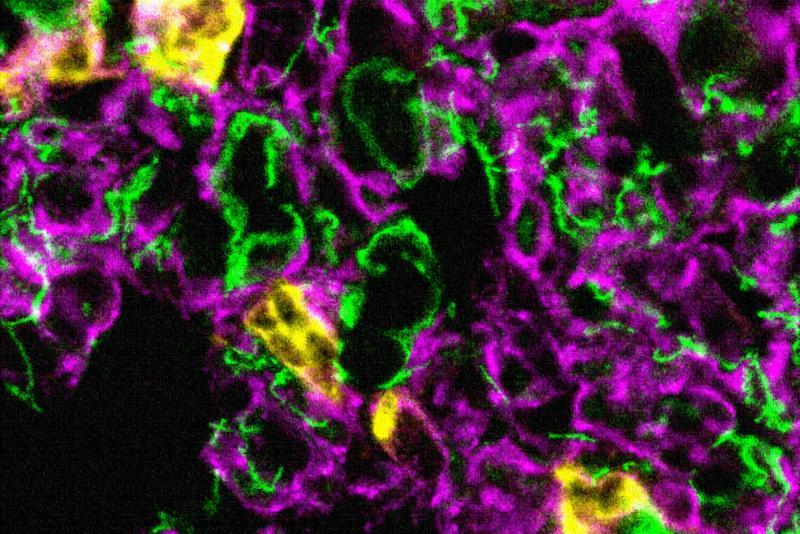
The Angiopoietin-Tie signaling pathway has long been known to be essential for the maturation and maintenance of healthy blood vessels. It stabilizes the vessel wall and regulates vascular growth during development. At the same time, it plays an important role in inflammation, when blood vessels become activated and immune cells leave the bloodstream and enter the surrounding tissue. How the same signaling pathway can control such different biological functions has remained unclear. A team led by Dr. Mahak Singhal and Prof. Dr. Hellmut Augustin has now found an answer to this question. At the center of the discovery is the vascular receptor Tie1, a protein found almost exclusively on endothelial cells – the cells lining the inner surface of blood vessels. During inflammation, part of the Tie1 receptor is enzymatically cleaved from the cell surface. To investigate the significance of this process, the researchers generated genetically modified mice in which Tie1 can no longer be cleaved. The result was clear: the animals developed entirely normal blood vessels and showed no detectable abnormalities during development, adulthood or aging. Even under conditions that normally stimulate the formation of new blood vessels, vascular growth remained unchanged. The picture was different when the mice were exposed to inflammatory stimuli. The genetically modified animals showed a markedly reduced inflammatory response. Their blood vessels were less strongly activated, and substantially fewer immune cells migrated from the bloodstream into the surrounding tissue. “Our experiments show that Tie1 cleavage is not required for the normal development or maintenance of blood vessels,” says first author Dr. Miki Kamiyama. “Rather, it enables blood vessels to respond specifically to inflammatory signals.” The findings therefore show that Tie1 cleavage uncouples two functions of the same signaling pathway: the vessel-stabilizing and vessel-growth-promoting functions of Angiopoietin-Tie signaling remain intact when Tie1 is preserved, whereas receptor cleavage is required for its pro-inflammatory activity. “The discovery shows how a single signaling pathway can regulate different functions of the vasculature,” explains study leader Mahak Singhal. “Tie1 cleavage creates a functional separation between the regulation of vascular growth and vascular inflammation.” The study highlights that endothelial cells do not merely form a passive barrier. Instead, they actively control when and under which conditions immune cells leave the bloodstream and enter inflamed tissue. The Tie1 cleavage is an early vascular event that facilitates the entry of circulating immune cells into inflamed tissue. Together, the study thus identifies a fundamental principle of vascular biology: a signaling pathway required for the stability and development of blood vessels can simultaneously regulate an inflammatory response through a specific molecular mechanism, without compromising its essential vascular functions. “The discovery shows that the different functions of the endothelium can be regulated more precisely and independently than we previously thought,” says lead scientist Hellmut Augustin. “It raises new questions about how such functional separation is organized in other endothelial processes.”